More than 15 years of experience
A reliable contractor

Dismantling of foundations
Dismantling of foundations is a complex engineering process that involves the demolition of structures that form the basis of a building. This procedure may be required both during reconstruction and during the complete demolition of an emergency building. You can order the dismantling of foundations at a favorable price in our company “Forest-Ukraine”.
Preparing for dismantling the foundation
Before starting the demolition of foundations, it is necessary to conduct thorough preparation. This stage is important for the successful and safe execution of the work. The preparatory process includes a detailed analysis of the object, planning and organization of safety measures, which allows you to avoid unexpected problems during dismantling.
Foundation condition assessment
Before the start of dismantling work, a detailed assessment of the condition of the foundation is carried out. The process includes the following:
- Determining the type of foundation (strip, slab, pile, columnar).
- Analysis of the materials from which the foundation is made.
- Assessment of the general condition and degree of wear.
- Measurement of size and depth of occurrence.
- Determining the presence of reinforcement and its location.
An important aspect during the demolition and dismantling of foundations is the identification of potential risks. The main ones include proximity to other buildings and structures, the presence of underground utilities (water, sewage, gas pipelines), soil condition and type, the possibility of equipment access to the object, etc.
Work planning
Careful planning is the key to a successful demolition project. This process involves the following steps:
- Development of a detailed action plan.
- Determining the sequence of work.
- Calculation of necessary resources (human, technical, material).
- Drawing up a calendar schedule for the execution of work.
- Preparation of cost estimates.
- Determining waste disposal methods.
A particularly important element of planning is obtaining all necessary permits and approvals from the relevant authorities regulating construction activities.
Security at the facility
Ensuring safety is one of the most important aspects when dismantling foundations. Key measures include:
- Conducting detailed safety briefings for all participants in the work.
- Providing workers with the necessary personal protective equipment (helmets, safety glasses, gloves, respirators).
- Installation of warning signs and fences around the work area.
- Organizing regular inspections of the technical condition of equipment.
- Development of an evacuation plan in case of emergencies.
- Monitoring the structural integrity of neighboring buildings during work.
Regular inspections of equipment and tools, monitoring the condition of structures, and knowledge of safety rules by workers during dismantling allow for timely identification and elimination of potential risks.
Methods of dismantling foundations
The price of foundation demolition depends on the complexity of the task and the chosen dismantling method. Many factors influence its choice:
- Type of foundation construction (strip, slab, pile, columnar).
- Dimensions and weight of the structure.
- The materials from which the foundation is made.
- Availability of the territory for machinery and equipment.
- Proximity to other facilities and buildings.
- Project budget.
- Work completion dates.
- Environmental requirements and restrictions.
- Possibility of reusing materials.
Modern technologies offer a variety of ways to demolish foundations, each with its own advantages and limitations.
Dismantling of strip foundations
Strip foundations are one of the most common types of foundations for buildings of various purposes. They are a continuous strip of concrete or reinforced concrete that runs under all the load-bearing walls of the building. Dismantling such foundations requires a special approach due to their considerable length and structural strength.
Manual dismantling
The manual method involves the use of jackhammers, perforators, crowbars and other hand tools. This method is laborious, but has a number of advantages, especially when working on small objects or in conditions of limited access. Manual dismantling allows for high accuracy of work, minimizing vibrations and noise.
Mechanized dismantling
Mechanized dismantling of strip foundations involves the use of special equipment (excavators with hydraulic hammers, bulldozers and cranes). This method is much more effective than manual, especially for large objects, where the volume of work is significant. The use of powerful equipment allows you to significantly reduce the time of work and reduce the cost of demolishing the foundation.
Dismantling of slab foundations
Slab foundations are a monolithic reinforced concrete slab that distributes the load from the building to the soil. Such foundations are characterized by a large area and thickness, which makes their dismantling quite difficult. For the effective demolition of slab foundations, special methods are used that allow the destruction of strong reinforced concrete with minimal time and resource consumption.
Diamond cutting
Diamond cutting is one of the most effective methods of dismantling slab foundations. This method involves the use of special diamond discs that are able to precisely cut concrete and reinforcement. Diamond cutting allows you to divide the slab into smaller fragments that are easier to remove from the area. The main advantage of this method is the minimization of vibrations, which is especially important when working near existing buildings.
Hydrocline
The hydrowedge method is based on the use of hydraulic wedges that create high pressure inside pre-drilled holes in the concrete. Under the influence of pressure, the concrete is split into pieces, which are then removed from the area. This method is particularly effective for thick slabs, where the use of traditional dismantling methods can be difficult.
Dismantling of pile foundations
Pile foundations are used in weak soil conditions or when it is necessary to transfer the load to deeper, more stable soil layers. They consist of vertical elements (piles) that are driven into the soil, and a grillage – a horizontal structure that connects the upper parts of the piles.
Pulling piles
Pile pulling is a method that involves completely removing the pile from the ground. This involves the use of specialized cranes with high lifting capacity and special equipment to grip the top of the pile. This method is used for piles made of metal, wood or reinforced concrete, if their design allows them to withstand the forces during pulling.
Pile cutting
The pile cutting method involves removing only the top of the pile, usually to a level that will not interfere with the future use of the area. The cutting process uses diamond cutting, which allows for precise and rapid separation of the top of the pile from its main body.
Choosing a method depending on the conditions
The choice of the optimal method of dismantling the foundation depends on many factors that must be taken into account to ensure the efficiency and safety of the work. To understand the specifics of choosing an approach, let’s consider them in the form of a table:
| Method | Advantages | Disadvantages | Recommended conditions of use |
|---|---|---|---|
| Manual dismantling | Minimal vibrations, high precision | High labor intensity, long execution time | Small objects, limited access of equipment, work near sensitive objects |
| Mechanized dismantling | High productivity, low labor intensity | Significant vibrations, need for space for equipment | Large objects, no sensitive neighboring objects |
| Diamond cutting | Minimal vibrations, high cutting accuracy | High cost, material thickness limitations | Slab foundations, work in densely populated areas |
| Hydrokline | Silent, no vibrations | Long preparation, high cost | Thick plates, work near sensitive objects |
| Pile pulling | Complete pile removal, minimal soil disturbance | Requires powerful equipment, limitations on pile type | New construction on site of dismantling, good pile condition |
| Pile cutting | Speed, minimal environmental impact | Part of the pile remains in the ground | Partial reconstruction, limited budget |
Our specialists will take into account all the features of dismantling the supporting structure and offer the best option. Contact our consultants to get answers to your questions.
Our projects
View all our works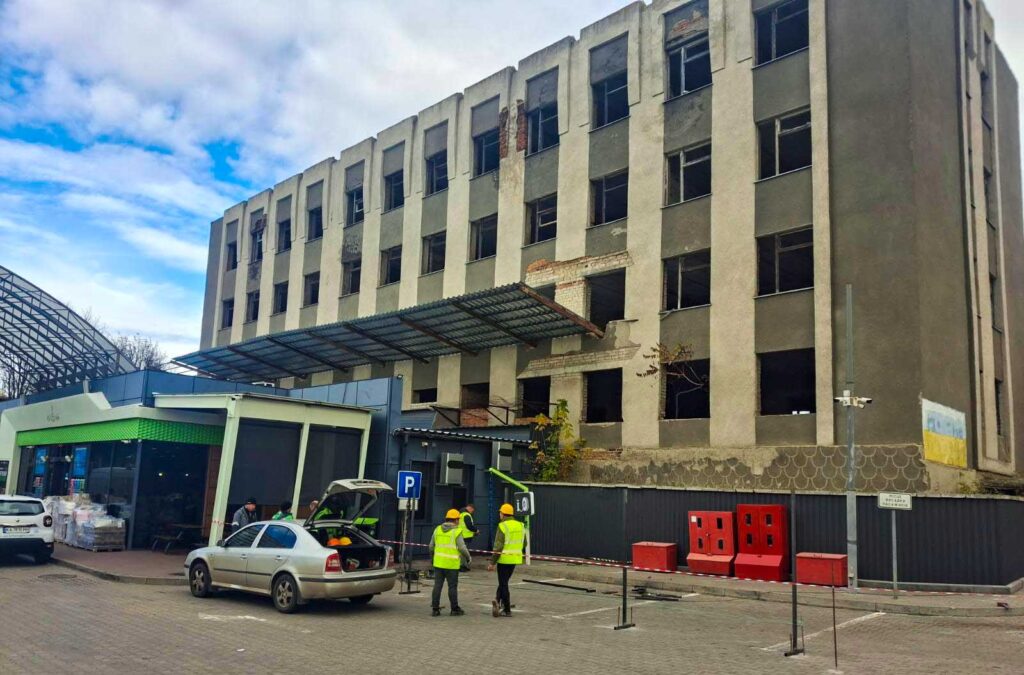
Dismantling of the administrative building
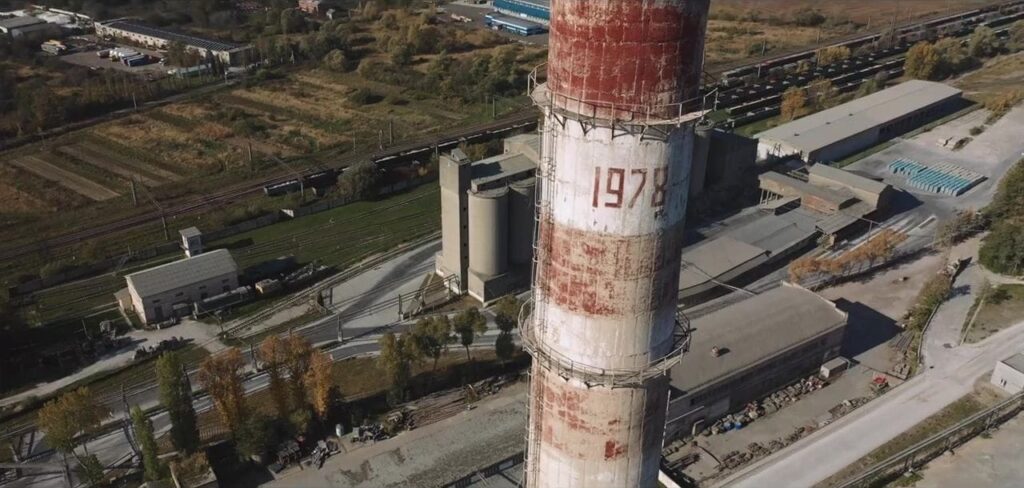
Dismantling of the ‘Mykolaivcement’ Chimney
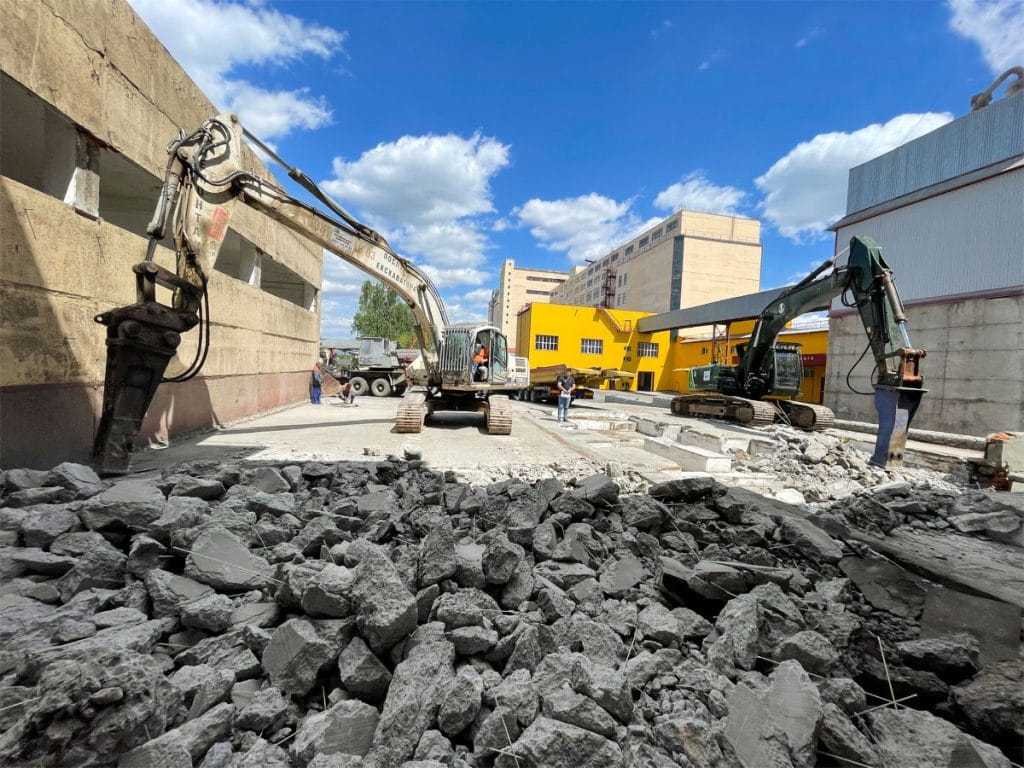
Dunaivtsi Elevator
Let's discuss your project
Thank you for your request
Frequently asked questions
What is needed to calculate the cost of dismantling?
To accurately calculate the cost, we need to obtain basic information about the object. In most cases, it is enough:
photo of the building from the outside (from all sides) and from the inside
technical passport or project (if available)
height of the building and number of floors
type of foundations (monolithic, prefabricated, pile, etc.)
approximate distance of transportation of construction waste
The more complete the initial information, the more accurate the calculation.
In more complex cases, we go to the object to inspect and prepare a detailed estimate.
What is more profitable: complete dismantling or partial dismantling with preservation of structures?
In practice, dismantling with preservation of structures almost always turns out to be more expensive.
This is due to the fact that:
a significant part of the work is performed manually, without the use of heavy machinery
the execution time increases
the risks for workers and structures increase
In addition, most used materials already have a significant degree of wear or have exhausted their resource, so their further use or sale is not always economically feasible.
In many cases, complete dismantling with subsequent processing of materials (for example, into secondary crushed stone) is a more profitable and safe solution.
What to do with construction waste after dismantling?
During dismantling, we immediately perform rough sorting of materials:
metal is separated and sent for recycling
concrete, brick and other mineral materials – separately
wood, plastic and other waste – separately
Furthermore, several options are possible:
Transportation to a landfill – a standard solution, but involves additional costs for disposal
Recycling of materials – we crush part of the concrete and brick into secondary crushed stone, which:
is used for backfilling, roads, preparation of foundations
can be implemented
We help you choose the best option to minimize the client’s costs.
Do you dismantle buildings damaged by hostilities?
Yes, we have experience in performing dismantling work on objects damaged as a result of war.
Such objects require a particularly careful approach, as they often have:
emergency and unstable structures
partial collapses
increased level of danger for personnel
Before starting work, we necessarily conduct an inspection, assess the technical condition of the building and develop a safe dismantling technology.
If necessary, we provide:
development of a PVR in a short time
phased dismantling with risk minimization
sorting and removal of construction waste
We work throughout the territory of Ukraine (except for zones of active hostilities) and are ready to respond promptly to such objects.
Is a project (PVR) needed for the dismantling of a building?
Yes, in most cases, the implementation of dismantling works requires the development of a work execution project (PVR).
We develop PVR in a short time – usually within 2-3 working days.
The document takes into account the dismantling technology, safety, sequence of work and organizational solutions.
Our company provides full support:
preparation of all necessary documentation
maintenance of executive documentation
work with VAT and official closing of volumes
That is, the client receives not only work, but a completely closed process in terms of documents and reporting.
Do you work throughout Ukraine?
Yes, we perform dismantling work throughout the territory of Ukraine, except for regions where active hostilities are ongoing.
We have our own fleet of machinery and equipment, which allows us to quickly:
mobilize a team
relocate equipment
start work in a short time
Thanks to this, we work effectively both on local sites and on large projects in different regions of the country.