Builder’s Handbook: Requirements for Masonry Quality

Published - 01 June, 2018
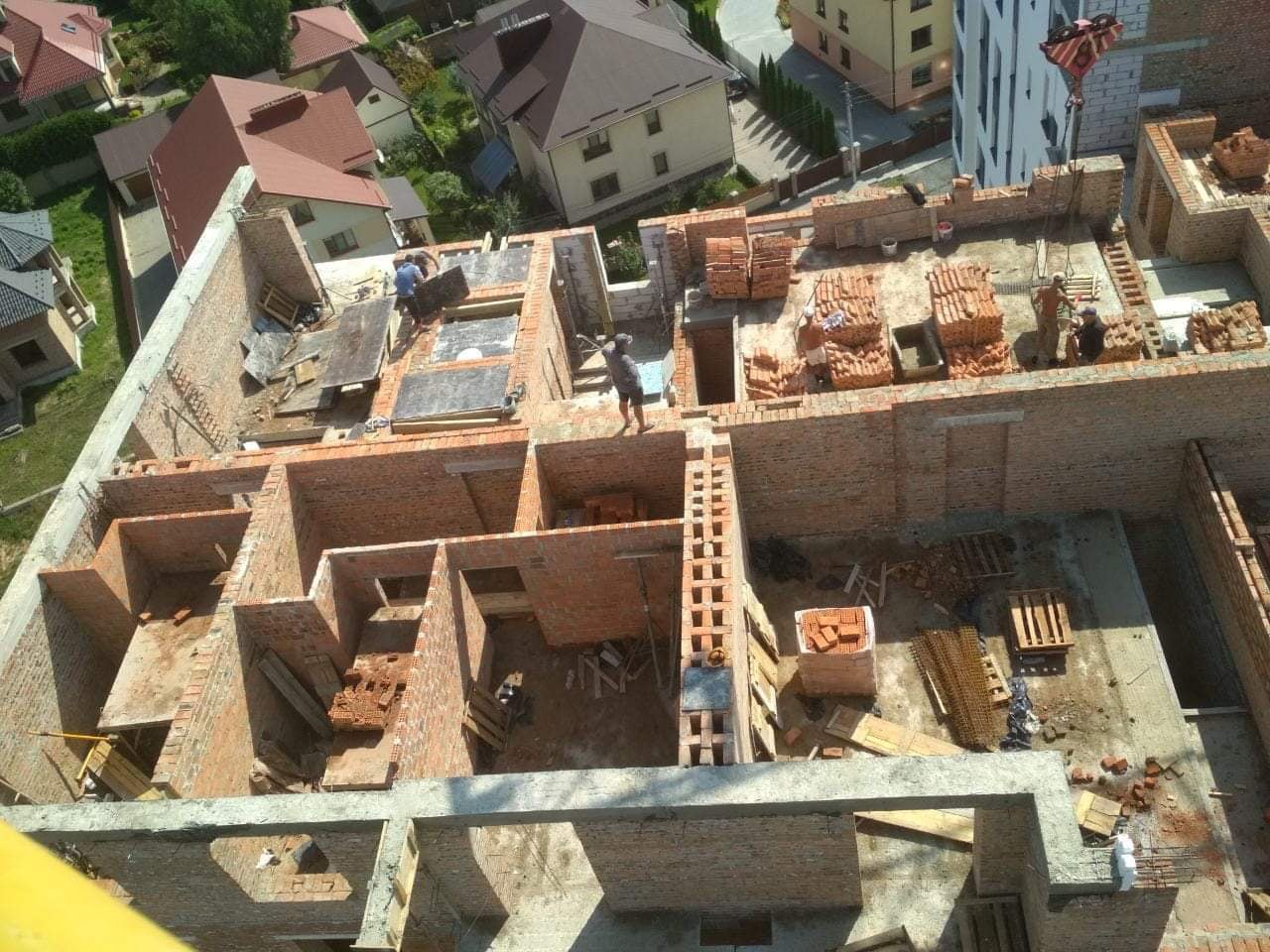
During the work, the bricklayer must ensure that the mortar and bricks specified in the working drawings are used, and that the horizontal and vertical joints are completely filled with mortar. It is impossible to allow empty spaces in the joints of the masonry unnecessarily. This weakens it and reduces its durability. During the masonry work, the bricklayer must regularly check:
- dressing of seams, horizontality and straightness of surfaces and corners;
- installation of embedded parts and joints;
- the quality of the masonry surface (pattern and jointing, selection of bricks for the outer verst, etc.).
To check the quality of the masonry, the bricklayer uses measuring tools and devices. During the masonry, it is also necessary to check for compliance with the project (for example, wall thickness, dimensions of openings, niches and their relative placement); places where purlins, beams, balconies, lintels, floor slabs are peeled off onto walls, columns, pilasters and brickwork; fastening of thin walls and partitions to the main walls or to the frame of the house, as well as the quality of reinforcement in accordance with the project.
After the completion of the masonry of each floor, an instrumental check of the horizontality, marks and marks of the top of the masonry should be carried out, regardless of the intermediate checks of the horizontality of the rows. In cases where the deviation exceeds the permissible ones, the masonry must be redone at the expense of the guilty or the defect must be corrected (according to the agreement with the customer). In dry, stuffy or windy weather, the brick is heavily moistened with water or immersed in water before laying in order to ensure better adhesion of the mortar and its normal hardening. This is especially important for masonry in seismic areas and masonry on a mortar with cement binders.
During a break in work, the top row of masonry should remain uncovered. Continuing masonry after a break should begin by watering the previously bricked surface with water. This is necessary because the brick quickly absorbs water, which will not be enough to hydrate the cement (i.e., part of the mortar will not harden, but will dry out).