How to perform dismantling work in confined spaces?

Published - 18 March, 2024
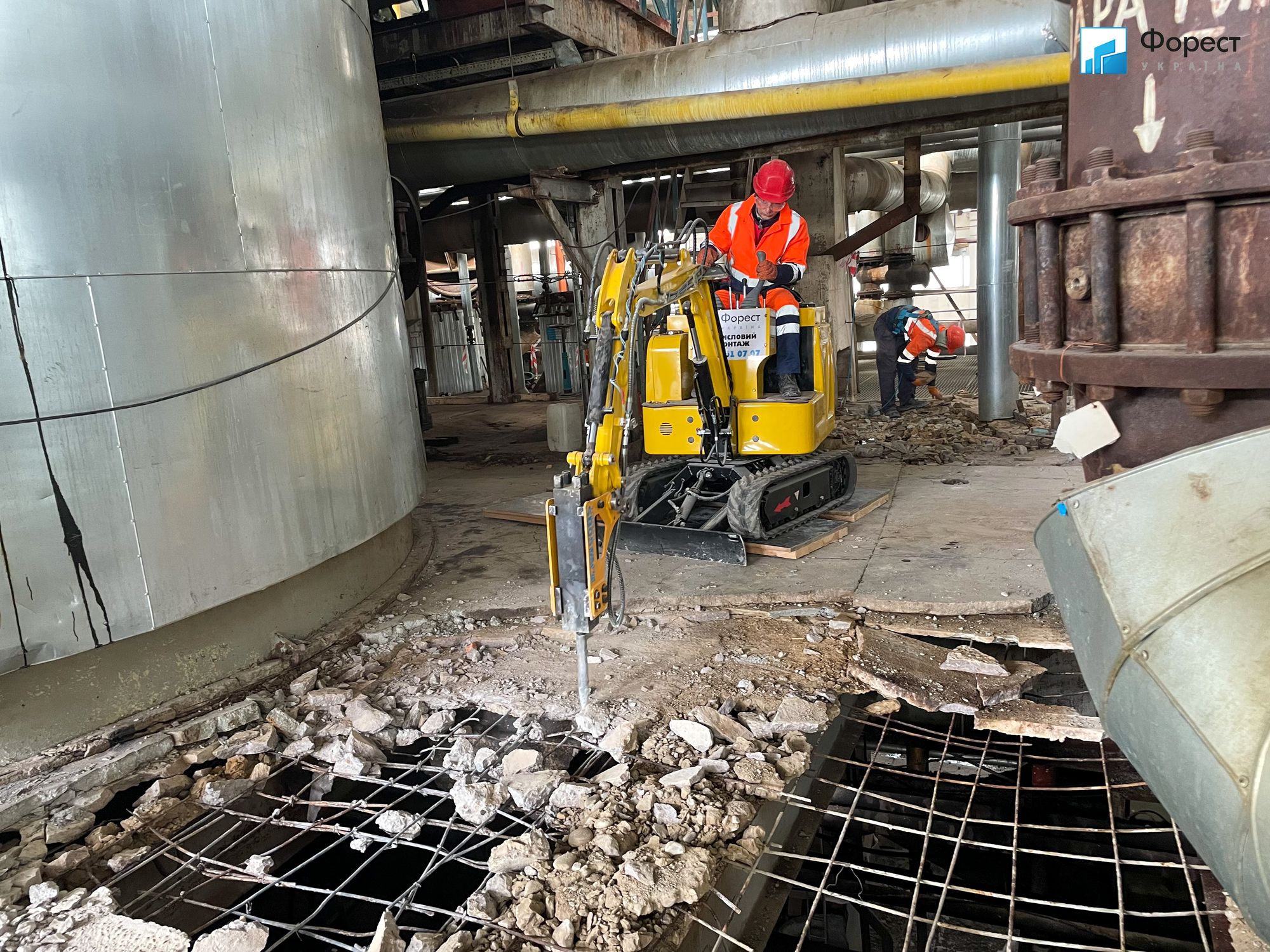
Dismantling in confined spaces is the performance of work on the disassembly and demolition of building structures, equipment or structures in places with limited space and difficult access. They are carried out in basements, swimming pools, mines, stairwells, wells, hangars, tunnels, etc. Dismantling in confined spaces is a difficult process due to small openings, holes and narrow passages. We will consider how such work is performed by specialists of the company “Forest-Ukraine” later in the article.
The importance of using the right equipment and techniques
To learn how to dismantle, you should read the instructions and follow safety rules and use personal protective equipment due to increased risks. The work is performed manually or with the help of compact equipment due to the impossibility of using large-sized machines.
Using the right equipment and tools is crucial to safely and efficiently carrying out demolition work in confined spaces. This is very important for the following reasons:
- Guarantee of personnel safety. In confined spaces, there is an increased risk of injury due to limited freedom of movement and the possibility of heavy objects falling. Therefore, the use of special protective equipment (helmets, gloves, respirators, etc.) is mandatory.
- Ergonomics and ease of dismantling. Special compact tools and mechanisms are adapted for working in narrow spaces, helping to minimize workers’ efforts and prevent overloading.
- Access to hard-to-reach places. The use of flexible or extended tools, mini-robots or video equipment allows you to reach the most remote corners of a confined space.
- Efficiency and productivity. The use of powerful yet compact equipment, including hydraulic cutters, breakers, mini excavators, etc., speeds up the dismantling process.
- Dust and noise reduction. Modern dust removal and noise suppression systems are integrated into the demolition equipment to reduce pollution.
- Control over dismantled elements. Special slings, grippers and lifting mechanisms help to safely lower or move large structures in confined spaces.
The right choice of machinery and equipment ensures proper conditions for workers, as well as successful completion of dismantling work in difficult confined conditions. In particular, the use of a mini excavator will help speed up dismantling, obtain high-quality results and reduce costs.
Equipment, techniques and tools for dismantling in confined spaces
The following equipment is mostly used to perform dismantling work:
- Hydraulic hammers and hydraulic shears are powerful tools for cutting and destroying concrete, metal, and masonry.
- Jackhammers are hand-held or mounted devices for demolition by destruction.
- Diamond wire saws – for precise cutting of concrete and reinforced concrete structures.
- Hydraulic hinge-bending machines – for dismantling by bending metal structures.
- Industrial vacuum cleaners – for collecting dust and small debris during dismantling.
- Mini excavators – provide productivity even in confined spaces.
Small size and maneuverability ensure reliable work in narrow passages and confined areas. Flexible or telescopic booms provide convenient access to hard-to-reach places. The use of mini excavators in demolition work allows you to work effectively in narrow rooms and passages.
Mini excavator Günter Grossmann GG1000
The Günter Grossmann GG1000 mini excavator is one of the most versatile types of equipment for performing demolition work in confined spaces. It is a very durable and powerful excavator model, equipped with a hydraulic hammer and buckets of various sizes.
The technique has the following features:
- Compact dimensions (2770 x 896 x 1490 mm) and low weight (1000 kg) allow this excavator to be used in narrow spaces, basements, and stairwells.
- The availability of buckets in sizes 200 mm, 340 mm, 500 mm, 800 mm and a powerful Toosan SB05 hydraulic hammer ensure practical use during various types of dismantling.
- Economical and at the same time powerful KUBOTA engine (11.8 kW/25 hp at 2300 rpm), for sufficient performance in dismantling work.
- The turning radius is 360°, which makes the mini excavator maneuverable in confined conditions.
- Optimal working parameters: digging depth 1.65 m and height 2.61 m.
Overall, the Günter Grossmann GG1000 mini excavator is an ideal choice of specialized demolition equipment in tight spaces. Its advantages allow for high-quality and safe work where larger machines are not possible.
Techniques and strategies for working in tight spaces
When using a GG1000 mini excavator and other equipment, planning and organizational work is carried out before the start of dismantling. In particular, the object is carefully inspected, critical areas and potential risks are identified, and a work plan is developed taking into account the sequence of dismantling structures.
Evacuation routes and emergency exits are necessarily prepared in case of an emergency. Necessary ventilation of the work area is ensured and the level of harmful substances is monitored. Unobstructed access and equipment access to the work site is organized.
Safety rules when operating a mini excavator and other special equipment:
- First of all, all equipment is carefully inspected and checked for proper operation.
- During operation, it is monitored that a safe distance from moving parts of mechanisms is maintained.
- Safety cables and scaffolding are used during work at height.
- Protective screens and fences are used when working with jackhammers and hydraulic shears.
- The presence of outsiders is not allowed.
- Personal protective equipment is used.
Compliance with these rules and regulations will help create proper safety conditions for personnel when operating equipment, in particular a mini excavator, as well as ensure the organization of the process and the successful completion of dismantling.